

Fractal photonic crystals open new paths for integrated quantum technologies
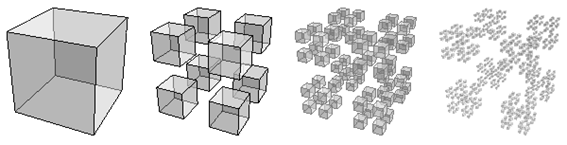
We are happy to announce the publication of our newest paper, «Fractal photonic crystals with controlled disorder for robust 3D-integrated on-chip quantum mode localization,» in the Optical and Quantum Electronics journal. On it, we present a new approach to designing photonic structures capable of confining light in a robust and scalable way and we explore how fractal geometries can improve the performance and resilience of integrated photonic devices, which are key components in emerging quantum technologies.
Modern quantum photonic systems rely on the ability to manipulate light within extremely small structures fabricated directly on chips. In these platforms, light must often be confined in well-defined regions so that it can interact with matter, store information, or generate single photons. Achieving this localization of optical modes is challenging because conventional photonic crystals typically depend on highly regular, periodic structures that are sensitive to fabrication imperfections. Even small deviations during manufacturing can degrade their performance.
The research addresses this challenge by proposing the use of fractal photonic crystals, structures whose geometry repeats itself across multiple scales. Unlike periodic crystals, fractal designs introduce a hierarchy of structural features that can naturally support localized optical modes across a wide range of wavelengths. The study systematically compares three three-dimensional fractal geometries, the Cantor dust, the Vicsek fractal, and the Sierpinski sponge, evaluating their ability to confine light and remain stable in the presence of disorder or defects.
Through extensive computational experiments exploring thousands of parameter combinations, we demonstrate that Cantor-dust architecture provides particularly strong localization of optical modes. This property arises from its highly fragmented geometry, where small dielectric regions are isolated yet still weakly coupled through evanescent interactions. Such a configuration enables light to remain tightly confined while maintaining robustness against structural imperfections, a key requirement for practical on-chip quantum devices.
An additional innovative aspect of the work is the integration of classical simulations with quantum-computing techniques. The photonic structures are translated into mathematical models similar to those used in condensed-matter physics, allowing the authors to represent them as graph-based Hamiltonians. These models are then mapped to qubit systems and tested using quantum algorithms such as the Variational Quantum Eigensolver, providing a bridge between photonic design and quantum computational frameworks.
Although the study focuses on theoretical modeling, its implications are significant for the future of integrated photonics and quantum information technologies. The proposed fractal architectures could enable multi-scale photonic devices capable of hosting multiple localized modes simultaneously, opening possibilities for quantum light sources, optical filtering, and advanced on-chip information processing.
These developments resonate strongly with the objectives of the DIGEST project, which investigates how digital technologies and advanced modeling can transform the management and operation of complex engineered systems. We promote the integration of data, models, and operational knowledge to support better decision-making across the lifecycle of technological assets, emphasizing predictive analysis and digital representations of physical systems, in particular in its WP2.
In this context, the fractal photonic structures described in the new research can be viewed as highly sophisticated engineered assets whose behavior emerges from complex multi-scale interactions. Their design and optimization rely on computational models, simulation frameworks, and data-driven exploration of large parameter spaces. Such approaches reflect the same paradigm of digitalization and model-based reasoning that underpins the DIGEST initiative.
More broadly, the work illustrates how combining advanced mathematical models, large-scale simulations, and emerging quantum computing tools can help engineers understand and design complex systems that would otherwise be difficult to analyze. As we explore digital twins, predictive maintenance, and data-integrated engineering processes, studies like this demonstrate how digital models can also drive innovation at the frontier of physical technologies.
In this way, the research not only advances the field of photonic quantum devices but also exemplifies the growing convergence between digital engineering methodologies and the design of next-generation technological infrastructures.