

Quantum Computing as a new field in DIGEST
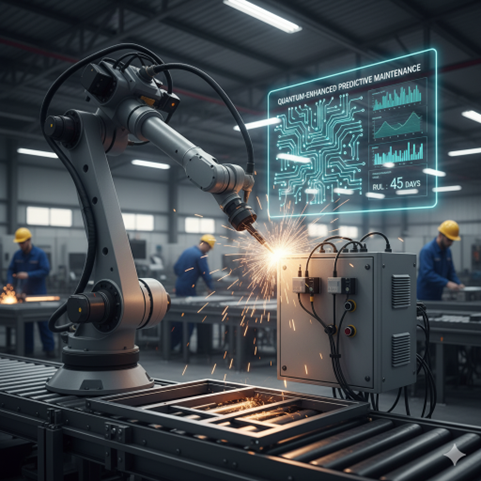
The field of industrial asset prognosis, also known as predictive maintenance, aims to anticipate machine failures before they occur. Quantum computing is being researched as a way to enhance these efforts by tackling problems that are too computationally intensive for classical computers.
Here are the primary applications for machines involved in industrial operations:
- Quantum Machine Learning (QML) for Failure Prediction: Industrial machines generate massive amounts of sensor data (vibration, temperature, pressure). QML algorithms can potentially find complex correlations and patterns within this data that are invisible to classical machine learning models. By training these models on historical data, they could more accurately predict the Remaining Useful Life (RUL) of a machine component and identify the early signs of a fault.
- Quantum Optimization for Maintenance Scheduling: Deciding when to service multiple machines to minimize downtime and costs is a complex optimization problem. Quantum algorithms like the Quantum Approximate Optimization Algorithm (QAOA) could be used to analyze all possible maintenance schedules and quickly find the most efficient one. This would lead to more precise, cost-effective maintenance plans.
- Advanced Simulations for Component Degradation: Predicting the wear and tear of a machine part over time is challenging. Quantum computers could be used to run highly accurate simulations of a component’s physical and chemical degradation processes. These quantum simulations would provide a more precise model of how a part will fail, allowing for better predictive maintenance models.
The DIGEST project focuses on digital twins for industrial assets, and its WorkPlan states that it is exploring the use of quantum computing for industrial applications, specifically as part of the A1.WP2. Thanks to the contributions from the excel researcher Prof Dr Eng. Javier Villalba Díez the project is digging on this particular area of knowledge.
The paper presents a novel hardware and software architecture that combines capacitive sensors with «quantum-inspired» computational filters to detect essential tremor. The core innovation is using a hybrid quantum-classical deep learning framework for data analysis, which allows for a more nuanced analysis of patterns. This approach is directly applicable to predictive maintenance for industrial assets. The graphene-printed sensor is analogous to any sensor used on a machine (e.g., vibration, temperature, acoustic sensors). The hybrid deep learning model could be trained to find subtle patterns in a machine’s sensor data that signal a developing fault, effectively predicting when maintenance will be needed.
The paper Quantum-enhanced signal processing via VQE for improved biomechanical feedback control explores the use of the Variational Quantum Eigensolver (VQE) algorithm for improved biomechanical feedback control. VQE is a quantum algorithm often used for optimization and simulation problems. This research is relevant to the optimization of industrial processes. The same VQE-based approach used for biomechanical control could be applied to optimize a feedback loop for an industrial robot or a manufacturing process . This would allow for more efficient, precise, and responsive control of the machinery based on real-time data, which is a key component of asset prognosis and smart manufacturing.
Coming news will promote further integration between tools to increase the power of this approach.