

AHI-based digital twins promise smarter, more resilient energy systems
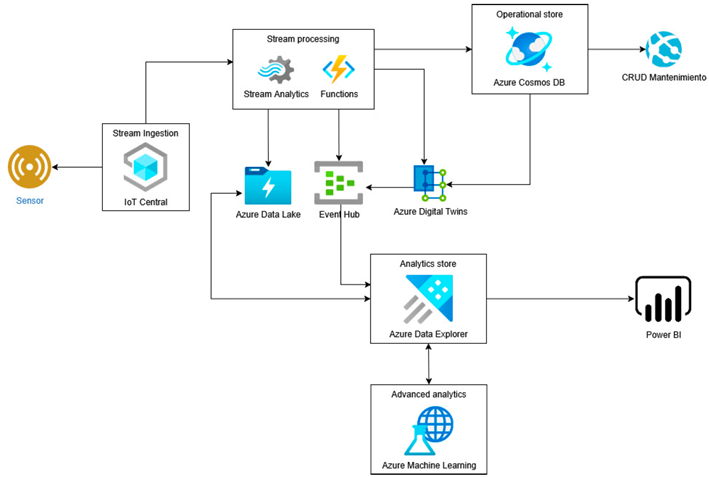
As part of ongoing efforts to enhance digital transformation in industrial systems, a new publication in Energies presents a structured data model for integrating the Asset Health Index (AHI) into Digital Twins of energy converters. The model, developed by researchers from the University of Seville, addresses one of the critical challenges in Industry 4.0: translating real-time and historical operational data into actionable asset health insights.
This contribution is directly aligned with the goals of the DIGEST project. By enabling the automatic and standards-compliant computation of AHI scores through a cloud-native architecture (Microsoft Azure), the model bridges the gap between physical assets and their virtual representations, unlocking powerful capabilities for predictive maintenance and lifecycle optimization.
A central innovation lies in the proposed UML-based data model, built on internationally recognized standards like ISO 14224 and RAMI 4.0. The system supports real-time ingestion of IoT telemetry, harmonization with historical maintenance data, and automatic calculation of degradation risk, making it feasible not only for large-scale operators but also for small and medium enterprises (SMEs) seeking affordable digitalization.
The approach was validated through a real-world case study involving three high-capacity DC/AC energy converters, where AHI-driven monitoring reduced unplanned failures by 43% and improved maintenance accuracy by over 30%.
“This work demonstrates how digital twins can become truly intelligent agents in industrial systems when paired with structured health metrics,” the authors note. “It provides a scalable path for operational resilience, especially critical in energy systems undergoing rapid decarbonization.”
DIGEST applauds this advancement as a concrete step toward semantically rich, interoperable digital ecosystems that can be replicated across domains such as buildings, transport, and manufacturing.